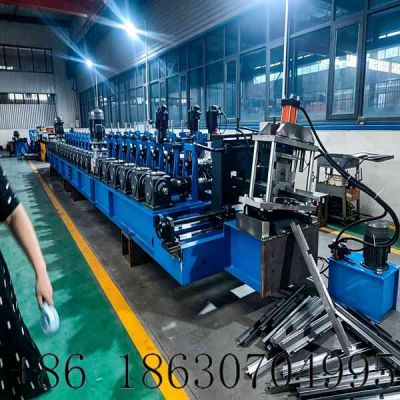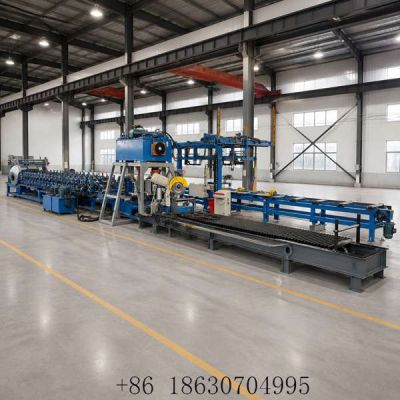
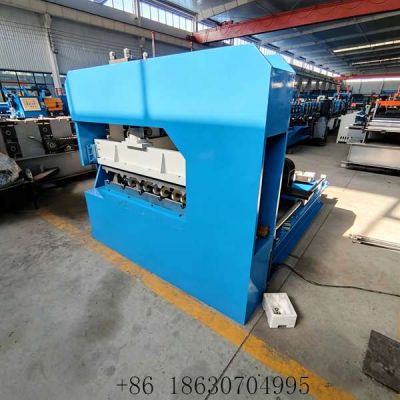
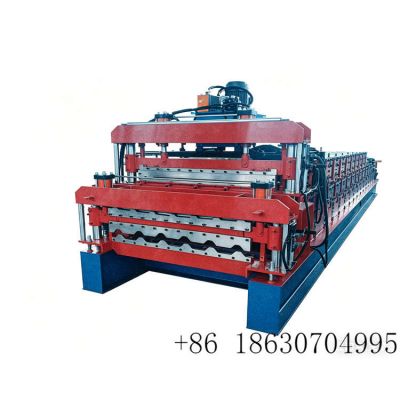
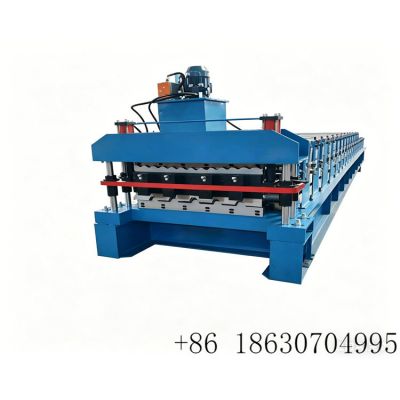
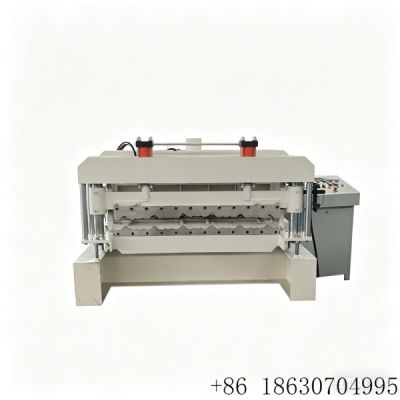
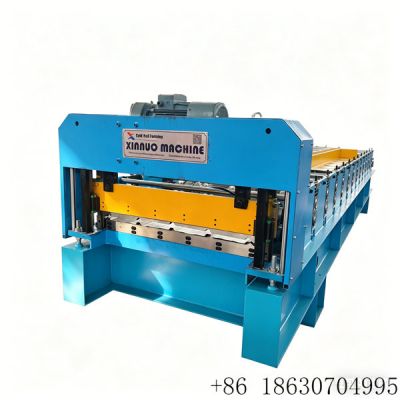
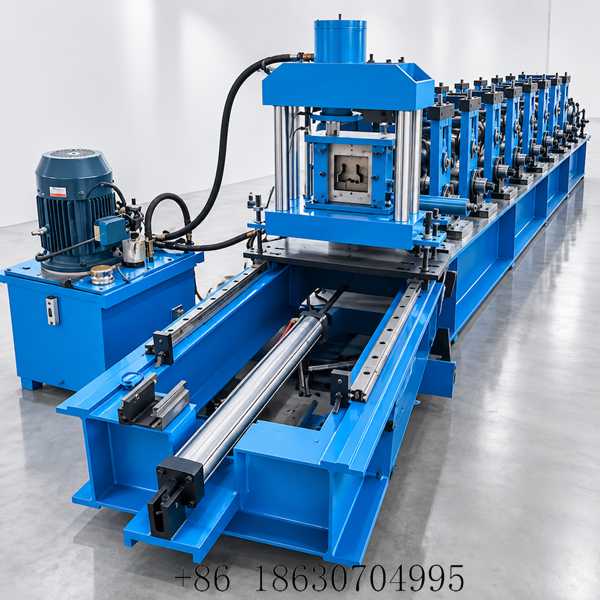
Automatic Shelf Upright Roll Forming Machine for Warehouse Pallet Racking
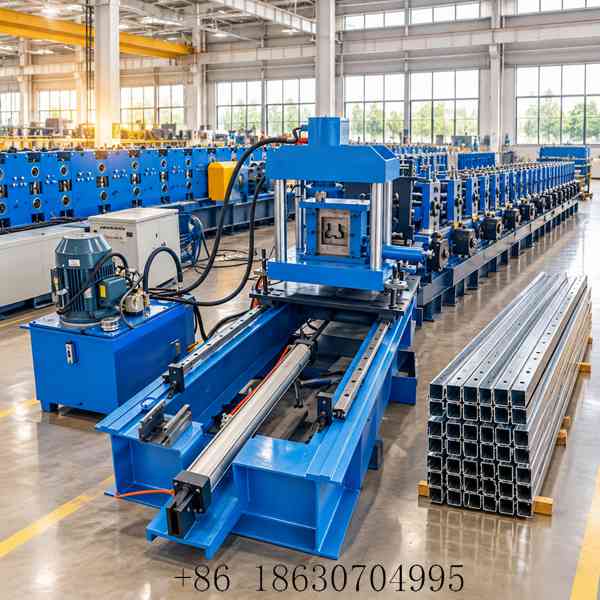
Steel coil in, finished rack upright out: one line runs decoiling, leveling, servo punching, cold roll forming and cutting to make the vertical columns of a pallet racking system.
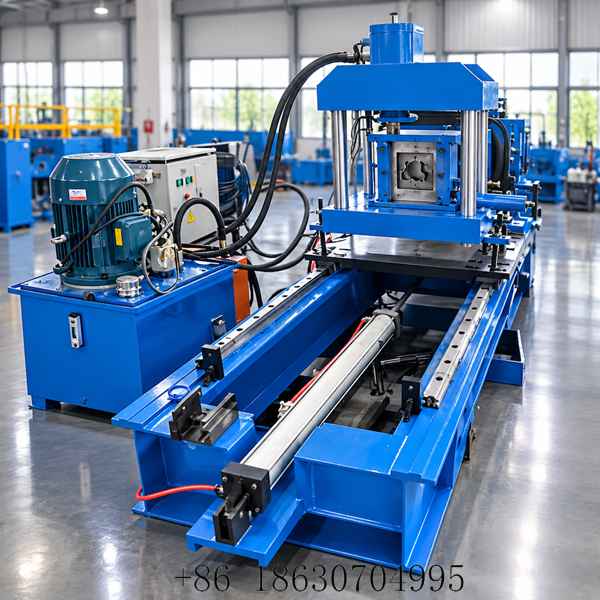
Reference build; values follow your drawing.
What the line produces
The upright carries everything above it, so the line has to hold section geometry and hole position at once. This machine runs galvanized or cold-rolled coil into a punched, cut-to-length column — C-type, L-shape and Omega profiles from one platform.
Profile dimensions follow your drawings or the racking standard your market works to: the same upright has to pass a local load test and fit a beam connector sourced elsewhere. Light, medium and heavy-duty uprights run on one line by changing the roll set and the punching recipe.
How the line runs
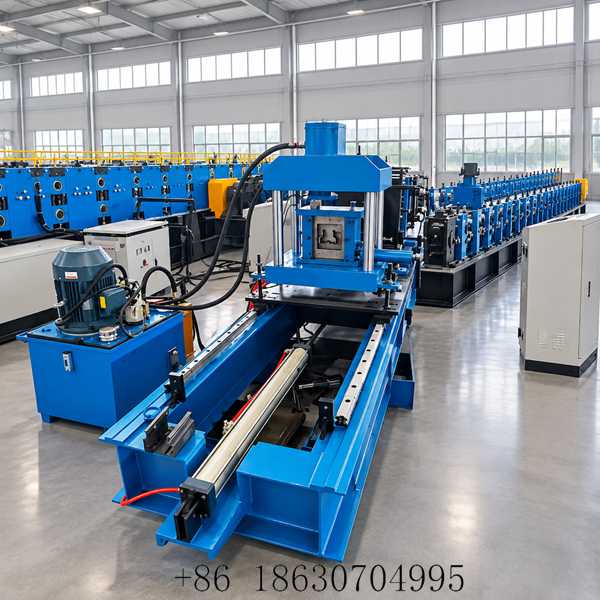
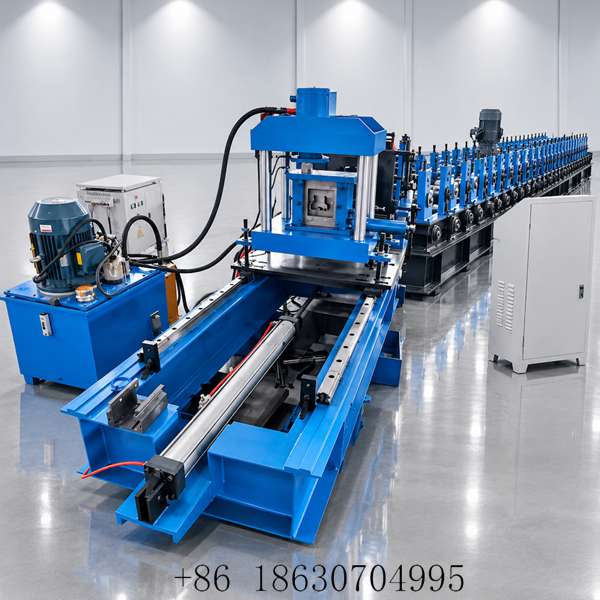
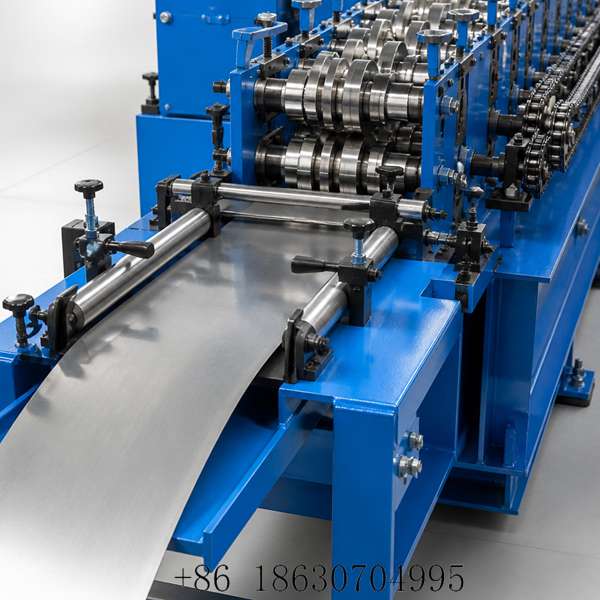
The five stations run in sequence under one PLC recipe: length, quantity, speed and punching pattern are set once, then repeated part after part.
- 01
Decoiling
The hydraulic decoiler pays off the coil; the infeed platform guides the strip, square to the first stand.
- 02
Leveling
A leveling unit removes coil camber and cross-bow, so the upright starts straight.
- 03
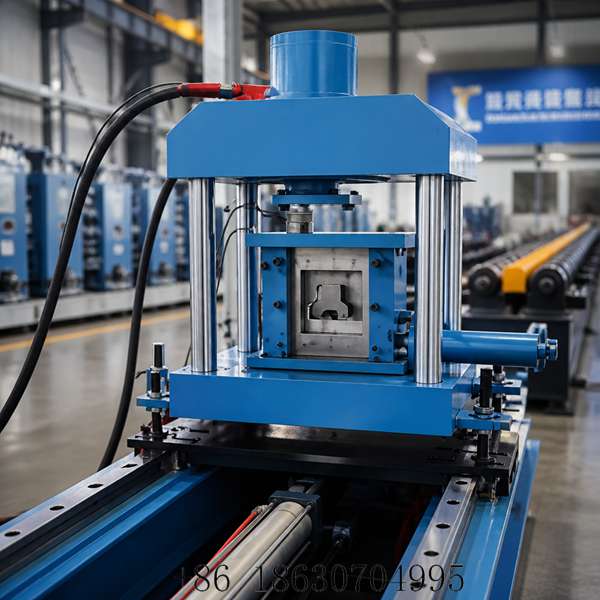
Servo punching
The servo press punches beam-connector holes on the fly at the pitch stored in the recipe.
- 04
Cold roll forming
Hardened rollers in a heavy-duty frame form the section stand by stand until flange and web angles match.
- 05
Automatic cutting
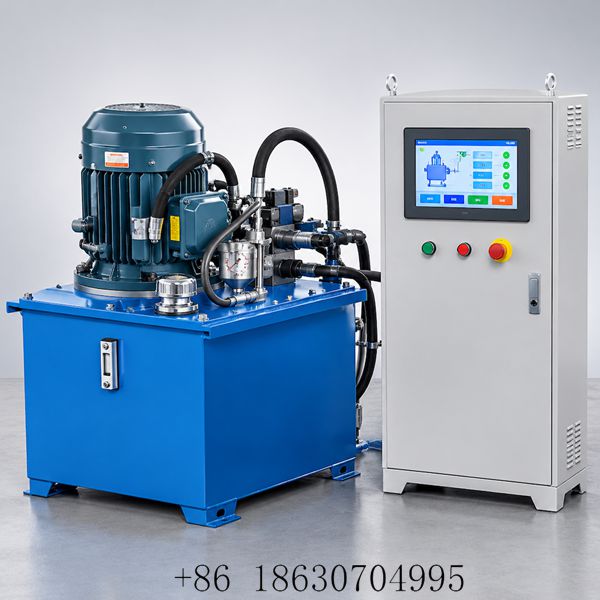
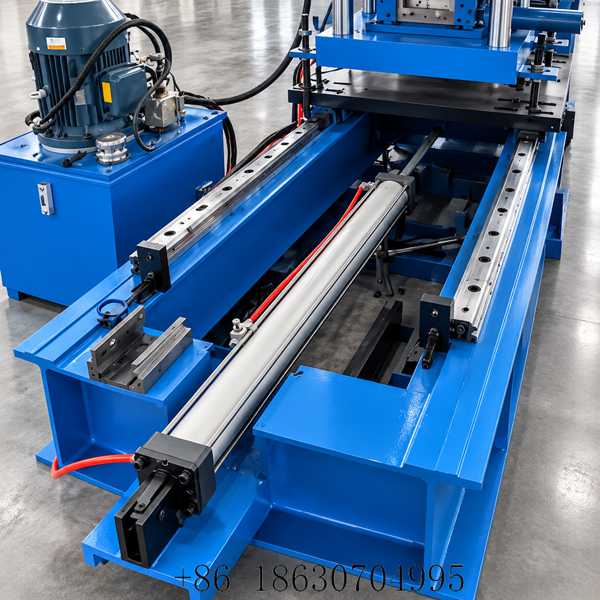
The hydraulic cutter cuts to the entered length; parts drop to the run-out table, counted and ready to weld.
Hole pitch that holds all shift
Hole pitch is where upright lines usually lose money: a mechanical index drifts with speed and temperature, the beam connector stops fitting, and parts get reamed out by hand at the end of the line. Here a servo unit positions the die on encoder feedback, so pitch holds from the first part of a shift to the last.
Punching patterns are stored per profile, so switching upright height or hole layout is a recipe change on screen, not a tooling change.
Built to hold accuracy
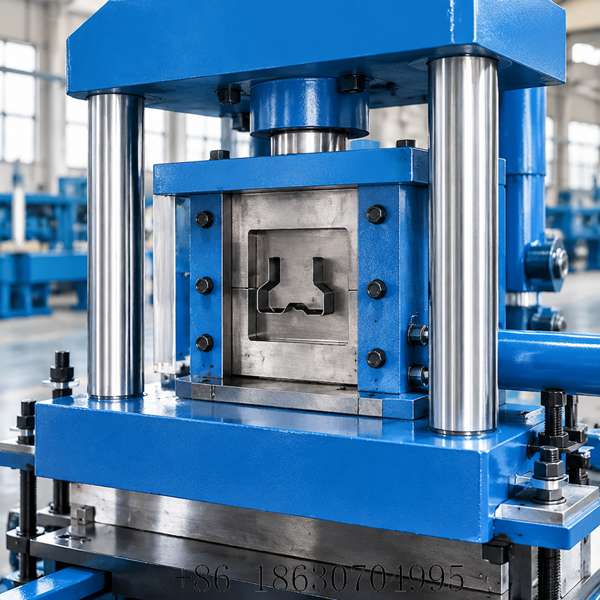
The cutting die is machined from one hardened block: the cut face stays square and the profile does not collapse at the blade.
Underneath, a heavy-duty frame, hardened rollers and a stable transmission keep the section steady across a long shift: no wandering web, no twisted flange, no re-setting after every coil.
Reference parameters
Typical build for a 90 × 70 mm pallet racking upright. Values are confirmed against your drawing before quotation; options quoted separately.
| Item | Specification |
|---|---|
| Profile types | C-type, L-shape, Omega, custom per drawing |
| Raw material | Galvanized steel coil, cold-rolled steel coil |
| Material thickness | 1.5 – 3.0 mm |
| Coil width | 100 – 400 mm |
| Coil weight | Up to 5 t standard; 10 t decoiler optional |
| Forming stations | 16 – 20, set by profile complexity |
| Line speed | 12 – 18 m/min with punching in cycle |
| Punching | Servo punching unit, hole pitch ±0.5 mm |
| Cutting | Hydraulic die cutting or flying saw |
| Length tolerance | ±1.0 mm |
| Main motor | 15 kW |
| Hydraulic station | 5.5 kW |
| Control system | PLC with touch screen, recipe storage, auto counter, fault alarm |
| Power supply | 380 V / 50 Hz / 3 phase; other voltages on request |
| Machine size (L × W × H) | approx. 12,000 × 1,500 × 1,600 mm |
| Total weight | approx. 8 t |
Who builds it
Hebei Xinnuo Roll Forming Machine Co., Ltd. has built roll forming equipment in Botou, Hebei since 1998: two production sites covering 50,000 m², five workshops for parts machining, welding, assembly and surface treatment, and more than 200 staff.
Lines ship to Russia, Africa, Southeast Asia, the Middle East and South America, two hours by road from the Port of Tianjin. Voltage, components, drawings, paint and packaging are specified per order, with English manuals, CE documentation and commissioning support.
See the full range of shelf rack roll forming machines we build for racking manufacturers, or compare the platform with our C and Z purlin lines.
Photographs show a typical build; details vary with the order.